
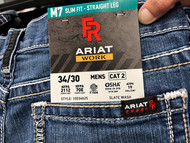
What Do Calories Mean on FR Clothing? Arc Ratings & ATPV Explained
Posted by FR Clothing & Supply Team on Oct 8th 2026
Calories on your FR clothing? Those numbers aren't about food. They describe the tested protective performance of arc-rated clothing.
Learn what cal/cm², arc ratings, ATPV, and CAT markings mean, and how to compare them with your workplace's safety requirements.
When you see a number like 8 cal/cm², 11 cal/cm², or 19 cal/cm² on arc-rated clothing, it tells you something important about the garment's tested protective performance. But what do those numbers mean, and how do they relate to arc ratings, ATPV, and CAT markings?
Let's break down the terminology so you can better understand your FR clothing labels and compare garments with your workplace's safety requirements.
Watch: Understanding Arc Ratings
Prefer to watch? Check out FR Clothing & Supply's video about arc ratings, then keep reading to learn what the numbers and abbreviations on your garment labels mean.
Are Calories, Arc Ratings, and ATPV the Same Thing?
Calories, arc ratings, and ATPV are closely related, but they are not exactly the same thing.
Calories per square centimeter (cal/cm²) is a unit of energy per area. Arc rating describes the tested arc-thermal performance of a fabric or clothing system. ATPV (Arc Thermal Performance Value) is one of the test-based values used to establish an arc rating.
Think of it this way: cal/cm² is the unit, arc rating is the protective performance rating, and ATPV is one way that rating is determined.
An arc rating is not a guarantee that a garment will prevent burns in every situation. Actual protection depends on the exposure, garment condition, and complete PPE system. [1]
What Does cal/cm² Mean on FR Clothing?
The abbreviation cal/cm² means calories per square centimeter. In electrical safety, it is used to express incident thermal energy and arc ratings.
For example, if a pair of arc-rated jeans has a rating of 19 cal/cm², that number describes its tested arc-thermal performance. It does not mean the jeans contain 19 food calories, nor does it describe how warm the fabric will feel during a workday.
Generally, a higher arc rating represents greater tested arc-thermal performance. However, choosing the appropriate protection requires comparing the complete PPE system with the requirements established for the work.
What Do ATPV and EBT Mean?
Two abbreviations you may encounter on arc-rated FR clothing are ATPV and EBT. Both are associated with arc-rating testing under ASTM F1959.
ATPV: Arc Thermal Performance Value
ATPV represents an incident energy level at which testing predicts a 50% probability of sufficient heat transfer to cause the onset of a second-degree burn under the test conditions.
EBT: Energy Breakopen Threshold
EBT is a test-based energy threshold associated with fabric breakopen. Breakopen means a defined opening develops in the tested material.
The reported arc rating is based on the applicable ATPV or EBT result, whichever is lower. Neither designation automatically means a garment is superior to one carrying the other designation. [2]
What Is the Difference Between CAT 2 and an Arc Rating?
CAT 2 refers to an arc-flash PPE category. Under the NFPA 70E PPE category method, Category 2 requires arc-rated clothing with a minimum arc rating of 8 cal/cm², along with other specified PPE.
A garment may have an arc rating higher than the minimum for its displayed category. That is why you should look for both the category marking and the garment's specific arc rating.
For example, these Ariat FR M7 jeans are labeled CAT 2 and have an ATPV arc rating of 19 cal/cm². The category and the numerical rating communicate related, but different, information.
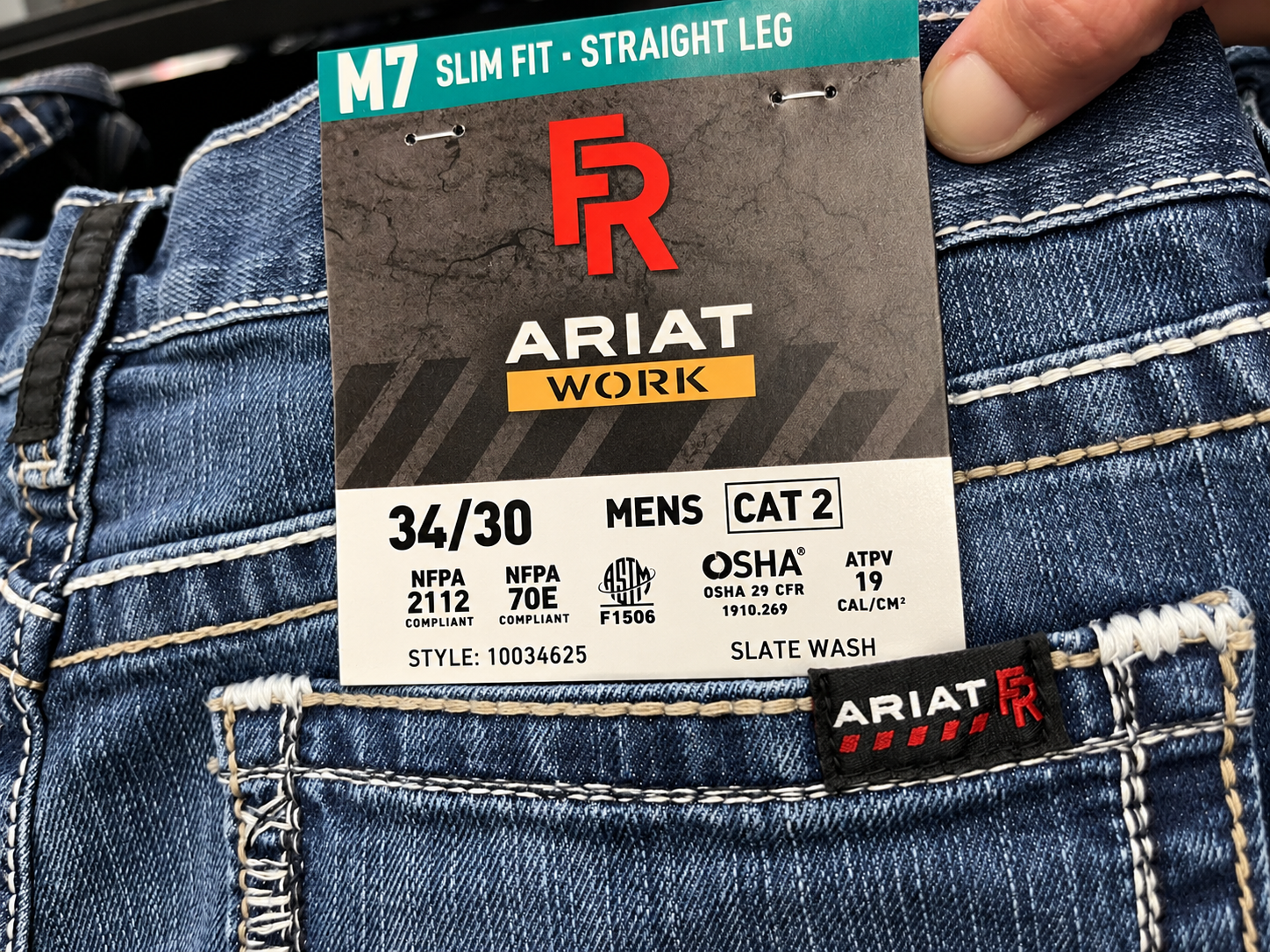
Remember that a garment's CAT marking alone does not establish the appropriate PPE for every task. Your employer's hazard assessment and applicable electrical safety requirements determine what protection is needed. [3]
Is All FR Clothing Arc-Rated?
No. All arc-rated clothing is flame-resistant, but not all flame-resistant clothing is arc-rated.
Flame-resistant clothing is designed to resist ignition and limit continued burning. Arc-rated clothing has also undergone specific testing to evaluate its performance against electric arc exposure.
If your workplace requires arc-rated clothing, don't assume that an FR label alone is enough. Look for the garment's arc rating and applicable standards.
Where Can You Find the Arc Rating on FR Clothing?
Manufacturers may display arc-rating information on a retail hangtag, a sewn-in garment label, or in the product's technical documentation.
For example, the permanent label inside these Ariat FR jeans states ARC RATING = 19 ATPV. It also identifies the fabric as 98% cotton and 2% elastane and directs the wearer to the reverse side for care instructions.
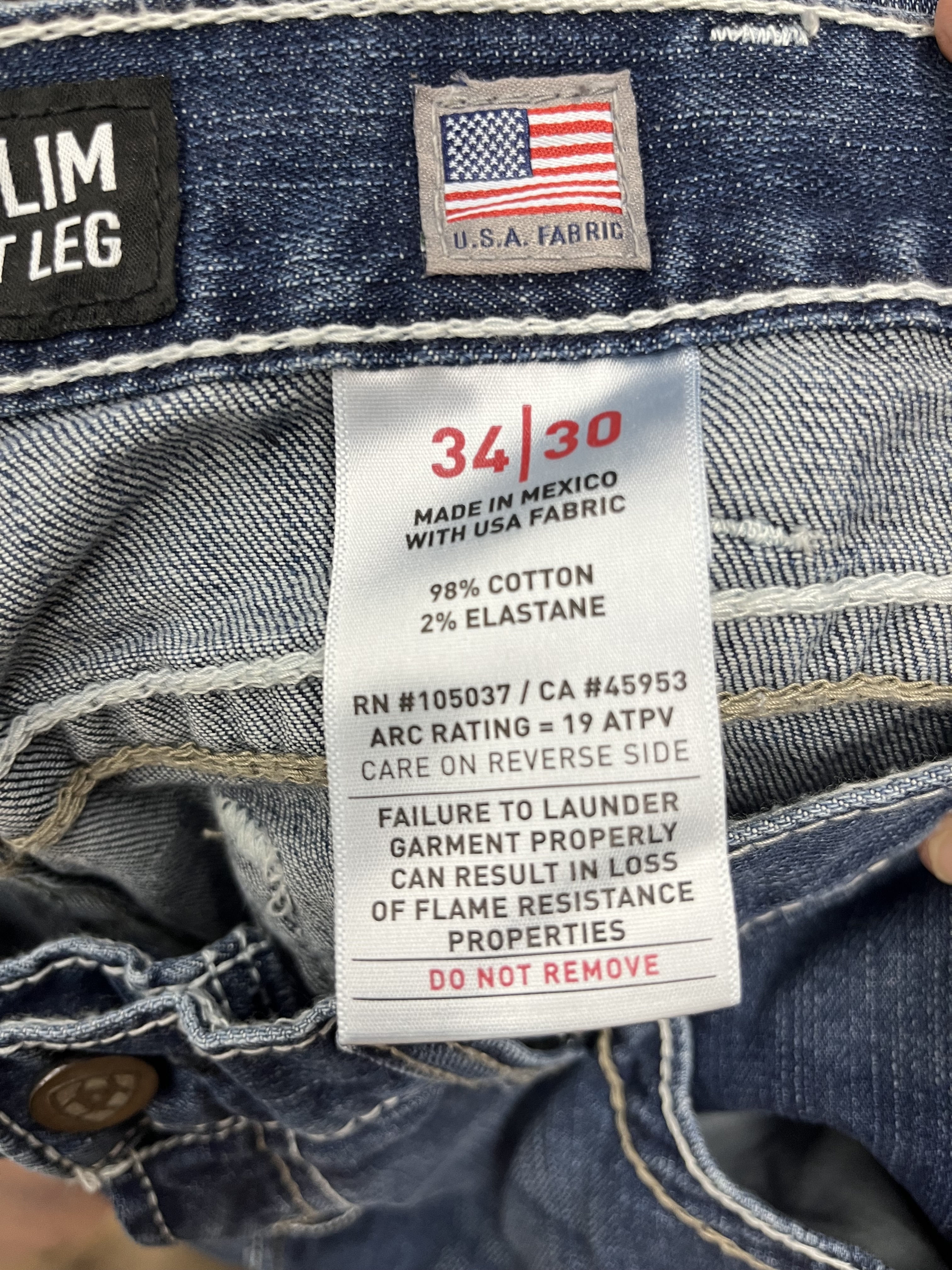
Unlike a removable hangtag, a permanent label stays with the garment. Keeping safety labels attached and following the manufacturer's care instructions helps preserve important information for future reference.
How to Compare Arc-Rated FR Clothing
When shopping for FR clothing, use this simple checklist:
- Identify the garment's brand and style number.
- Locate its arc rating in cal/cm².
- Review the CAT marking and applicable safety standards.
- Check the manufacturer's care and maintenance instructions.
- Compare the garment and complete PPE requirements with your employer's written safety requirements.
If the label is missing, damaged, or difficult to read, contact the manufacturer or your workplace safety representative rather than guessing about the garment's protective performance.
Frequently Asked Questions About FR Clothing Arc Ratings
What does 8 cal/cm² mean on an FR shirt?
It means the shirt has an arc rating of 8 calories per square centimeter. This is also the minimum clothing arc rating associated with PPE Category 2 under the NFPA 70E category method.
Is ATPV the same as an arc rating?
ATPV is one of the test-based values used to establish an arc rating. The reported rating may be based on ATPV or EBT, depending on the test results.
Does a higher calorie rating mean better protection?
A higher arc rating indicates greater tested arc-thermal performance, but the appropriate PPE must still be selected based on the actual workplace hazard and applicable requirements.
Can FR jeans have an ATPV rating?
Yes. Arc-rated FR jeans, shirts, jackets, and other garments may carry ATPV-based ratings. The Ariat FR jeans shown above, for example, have an arc rating of 19 cal/cm².
Quick Takeaway
Calories per square centimeter describe the units used for arc ratings. ATPV and EBT are test-based measures used to establish those ratings, while CAT markings identify PPE categories. Always compare the garment's specific rating and other protective information with your employer's requirements.
Need help understanding your FR clothing labels? Visit FR Clothing & Supply at 340 Justin Ave, Suite 104, Platteville, CO 80651, or shop FR clothing and workwear online. Our team can help you locate product ratings, understand manufacturer labeling, and compare garments against the requirements provided by your employer.
Important Safety Information
This article is provided by FR Clothing & Supply for general educational purposes only and is not a substitute for manufacturer instructions, workplace safety procedures, or professional safety guidance. Always verify product specifications, protective ratings, care instructions, and applicable safety standards with the original manufacturer and your employer's safety department. Your employer is responsible for determining appropriate personal protective equipment based on workplace hazards. FR Clothing & Supply does not independently certify that any garment is suitable for a particular workplace hazard.